
Michelangelo Buonarroti & Tommaso De' Cavalieri
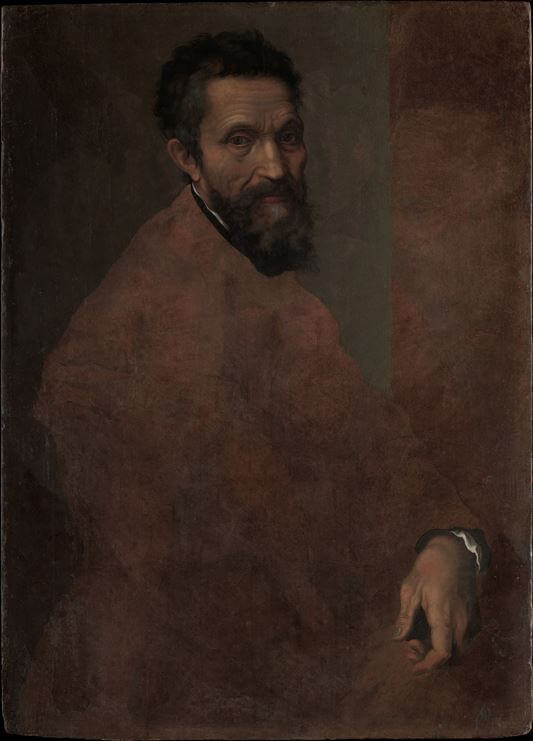
Michelangelo Buonarroti is one of the most celebrated sculptors and artists of the Renaissance. For his sculptures, the quality of the marble was crucial. He selected blocks himself, examining the colour, veining and flaws in the stone, and repeatedly spent time in the marble quarries of Carrara and Pietrasanta. There he gave precise instructions on the size, shape and extraction of the blocks.
From 1532 onwards, Michelangelo was bound by a close emotional relationship to the much younger Roman nobleman Tommaso de’ Cavalieri. Contemporaries praised Cavalieri’s beauty, education and noble bearing. Michelangelo was deeply impressed by him and gave him highly finished drawings, including mythological sheets such as The Fall of Phaeton and Tityus. He also dedicated numerous sonnets to Cavalieri, in which admiration and longing are unmistakable. The poems are among the best-known testimonies to same-sex love in the Renaissance. For Michelangelo, physical beauty, spiritual love and religious thought were closely intertwined.
Whether the relationship was physical cannot be proven. Later editors, however, intervened in the transmission of the poems: when Michelangelo’s poetry was printed in 1623, male references were partly softened or recast as female. The relationship lasted for decades. Cavalieri was also present at Michelangelo’s deathbed in 1564.
Michelangelo Buonarroti (1475-1564)
attributed to Daniele da Volterra
oil on canvas, ca. 1545
Metropolitan Museum of Arts, Department of European Paintings, 1977.384.1
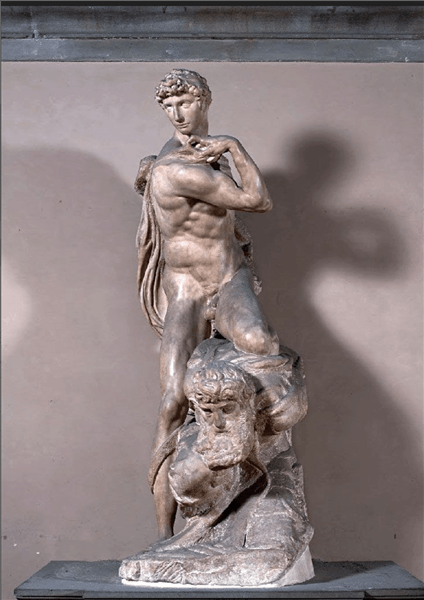
The Genius of Victory
An image of Tommaso?
Genius of Victory
Michelangelo Buonarroti
marble statue, ca. 1532-1534
Gallerie degli Uffizi, Florence
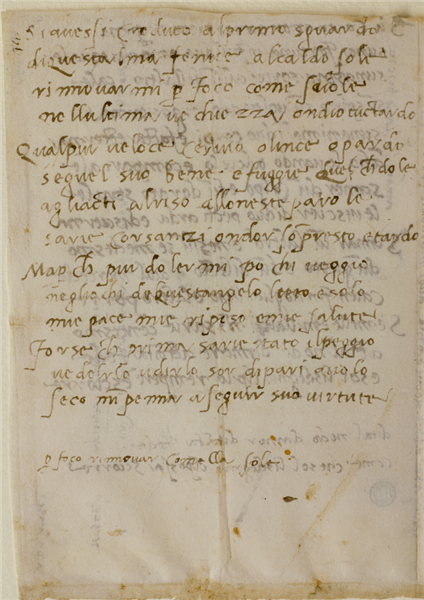
S'i' avessi creduto al primo sguardo
Michelangelo's Sonett 61
Had I believed, when first I met the glow
Of this bright soul, my sun, that I might rise
Through fire renewed in such triumphal wise
As doth the Phœnix from her ashes go,
Like some fleet-footed creature, pard or roe,
That seeks its joy and flieth from its fear,
To meet the act, the smile, the accent dear,
I would have leaped, now in my swiftness slow.
Yet why indulge regret, the while I see
In eyes of this glad angel, without cease,
My calm repose and everlasting peace?
More painful days, perchance, had dawned on me,
If I had earlier met, yet been denied
The wings she lendeth me to fly beside.
Translation by William Wells Newell