
Gaps in the historical record
Mining archives mainly contain records on ownership, wages, quarterly accounts, debts, safety, responsibilities and resources such as wood, coal or water. They are business archives. They show what authorities and mine owners were interested in: output, administration and the economic balance.
Precisely those sources that could tell us about everyday life, relationships and view of self are often missing. Towards the end of the 18th century and in the first half of the 19th century, illiteracy was widespread among ordinary workers. Many miners could write little more than their own name. In urban and bourgeois circles, letters, household books, chronicles and personal records were produced. Workers’ self-testimonies, by contrast, are rare. As a result, many experiences from the world of the miners remain invisible.
The Steinhauser Archiv is the business archive of the Ahrner Handel, the company that operated the mine in Prettau from the 17th century onwards. It preserves more than 11,000 business records relating to the company’s mining activities. Only about a handful deal with questions of morals and the everyday life of the miners.
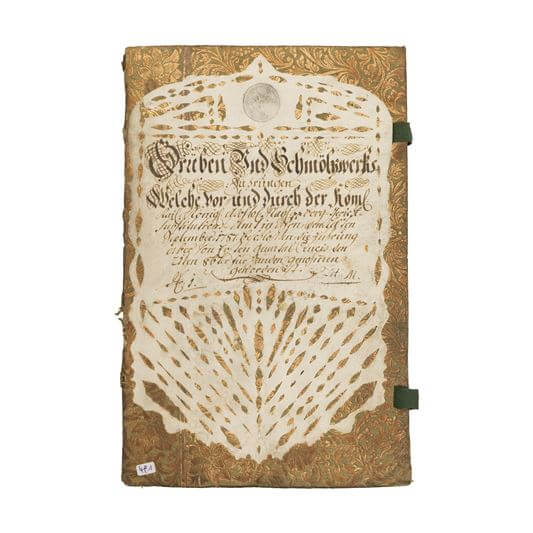
The general account book brought together the mine’s income and expenditure. It recorded wages, material costs, deliveries, dues, debts and revenues. It was therefore a central instrument of control for the mine owners and the mine administration.
Alongside the general account books, there were also quarterly accounts. In this historical context, an account was a statement of income and expenditure. In the Ahrner Handel, such accounts were prepared four times a year and often separately for the mine and the smelting works.
Hauptrechnungsbuch des Berg- und Schmelzwerkes des Ahrner Handels
1787
Steinhauser Archiv, 49.
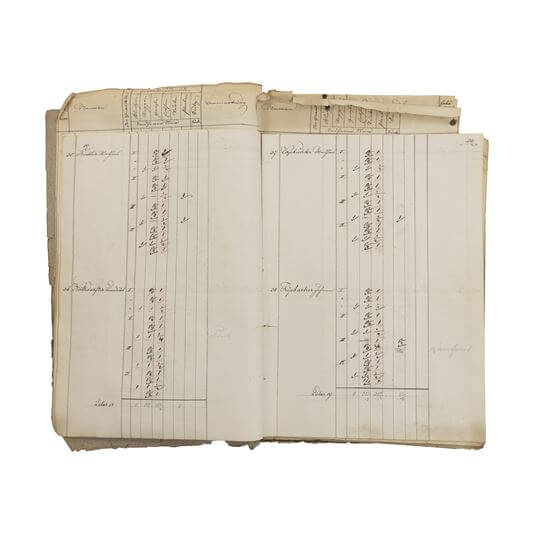
The miners did not receive their wages entirely in cash. Part of their pay was issued in goods, known as Pfennwerte. These included mainly grain and other foodstuffs, but also textiles, leather, shoes and tools. In the grain store in Steinhaus, these goods were stored and distributed.
Provision registers recorded which goods were available, issued or charged. For the mine owners, this trade was important because it organised the supply of miners in often remote mining districts. At the same time, trade in Pfennwerte generated additional profit. Authorities therefore repeatedly warned against excessive prices and against forcing goods on workers instead of paying their wages in cash.
1870
Steinhauser Archiv, 66.3
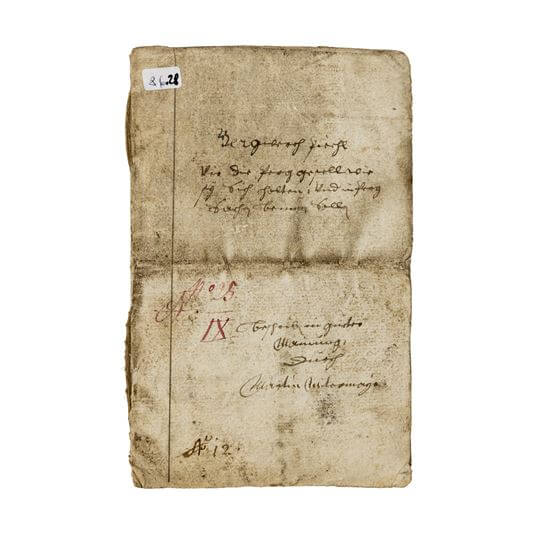
This miners’ handbook contains not only advice on how to find ore, but also rules of conduct. Miners were expected above all to love and fear God, to take no part in uprisings or incite others to do so, and even to think at night about how they intended to carry out their work the next day. Lying, of course, was considered shameful and forbidden. The miners were to listen to advice from everyone, but believe little of it, since much could be misleading. These rules concerned morality and faith, but they were aimed above all at an orderly working routine. For the mine owners, what mattered was that the miners worked reliably, maintained peace within the operation, stirred up no unrest and placed their knowledge at the service of the mine. Conduct was therefore also understood as part of labour discipline.
Bergwerch Piechl vir die Berggesellen wie sie sich halten und in Bergsachen benehmen sollen
Written by Martin Mittermayr
1717
Steinhauser Archiv, 86.2