
Bukhontxana
"Mine marriages" in South Africa
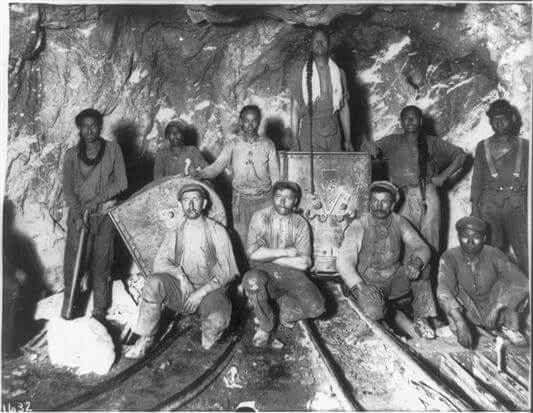
From the late 19th century onwards, same-sex relationships developed among South African mineworkers. In the workers’ own language they were known as Bukhontxana, and in English they have often been described as “mine marriages”. In the male-dominated mining compounds, from which women were largely excluded, older workers took younger men as temporary “wives”. In the sources, these younger partners are often described as “wives of the mine”. They performed domestic tasks, washed, cooked, took care of personal belongings and shared their “husbands’” beds at night.
These relationships followed their own rules. Later accounts refer to Umteto ka Sokisi, a code of conduct that regulated courtship, gifts, jealousy, duties and separation. Such relationships were widely known in many places and, in most cases, were not simply forced. Some younger men entered them deliberately in order to gain protection, possessions or bridewealth for a later marriage with a woman. There was courtship, jealousy, separation and wedding celebrations with dancing, feasting and symbolic bride gifts.
Colonial authorities and missionaries saw these relationships as a moral problem. In 1907, Henry Taberer and J. Glenn Leary investigated “mine marriages” in the gold mines near Johannesburg. The report was produced after missionary complaints and was based on statements by African and European witnesses. Such investigations usually described the relationships through colonial terms such as “unnatural vice” and judged them as a moral threat to labour, discipline and Christian order.
Some observers presented “mine marriages” as a makeshift solution caused by the absence of women and the fear of venereal disease. This interpretation is too narrow. Some men extended their stay at the mines in order to remain with their “mine wives”. Others later spoke of affection, jealousy and conflict, that is, of relationships with emotional weight. The later return to marriages with women and to family life was also shaped by social pressure, the threat of ostracism and the lack of viable alternatives outside the mines.
Black, Chinese and white workers in a gold mine in South Africa
between 1890 and 1923
Frank and Frances Carpenter Collection, Library of Congress Prints and Photographs Division, LC-USZ62-40653.