Traces of music
What material traces can reveal the music of the past when the sounds themselves have long since faded away?
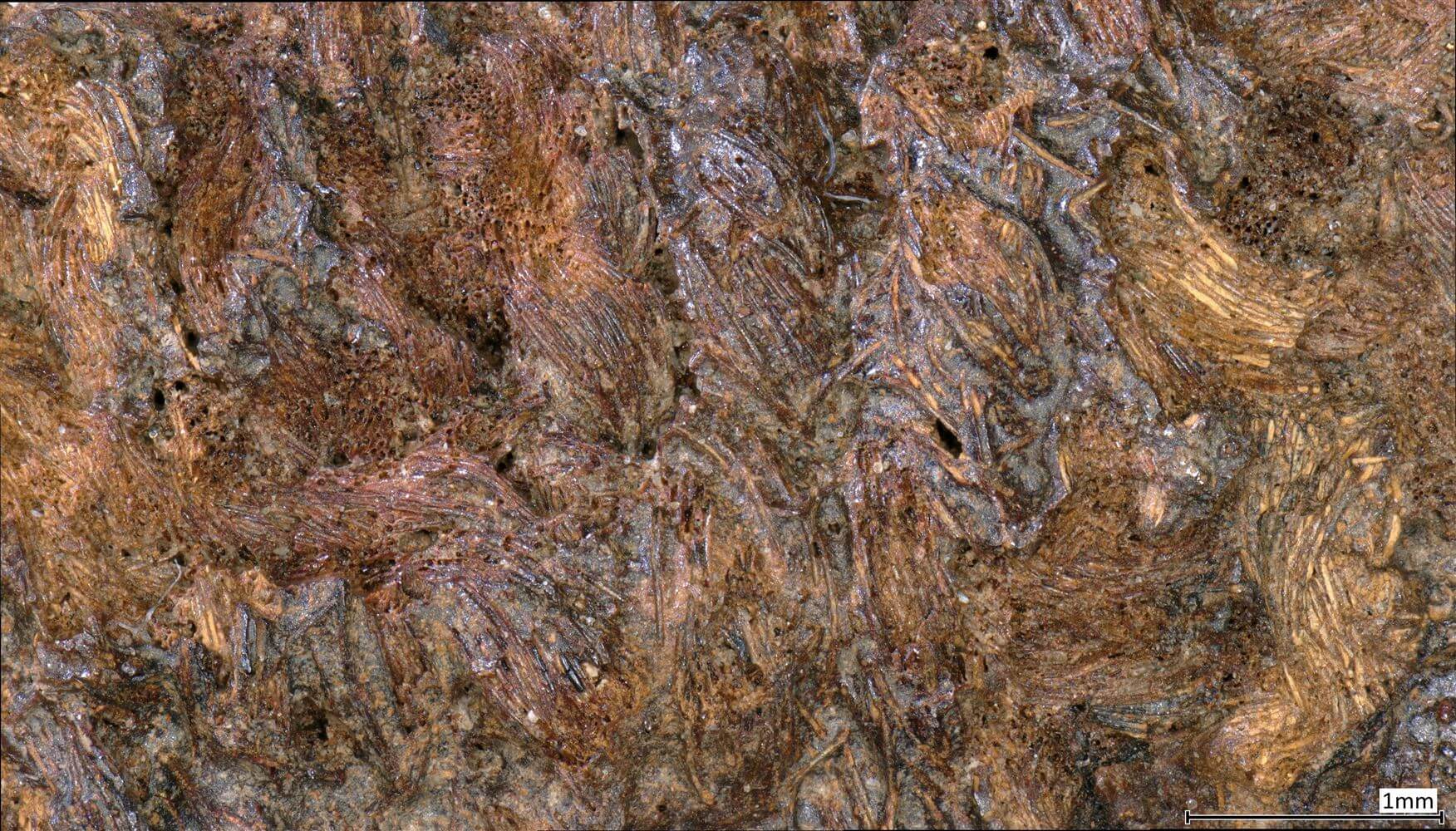
Music archaeology is dedicated to the systematic study of the material remains of sound-producing instruments and the contexts in which they are found. Archaeological excavations in the Tyrolean region repeatedly uncover objects that allow direct conclusions to be drawn about historical performance practice. The distribution of finds, however, is highly uneven because of the physical properties of the materials used. Metals, bone and fired clay can survive for centuries in damp or acidic soil relatively unscathed. Archaeologists therefore regularly find fragments of bells, iron Jew’s harps, clay signal whistles or fully preserved longitudinal flutes made from animal bone. Organic materials such as wood, leather and animal gut, which formed the main components of most string instruments such as fiddles, lutes and harps, decay rapidly in the ground. Often, all that remains of a medieval fiddle are metal fittings, buckles or small bone pegs. These sparse remains leave major gaps in our understanding of instrument construction.
To fill these gaps in the material record, researchers must combine archaeological evidence with visual sources. The Tyrolean region preserves a rich collection of medieval wall paintings and frescoes depicting musicians and instruments. Sacred frescoes in churches often show angels with musical instruments, while secular paintings provide insights into everyday courtly and urban culture. These images are invaluable to music archaeology. They provide precise visual information about details that do not survive in the ground: the number of strings, the shape of the bridge, the construction of the pegbox and the way an instrument was actually held while being played.
Towards the end of the Middle Ages, around 1500, the range of sources expands to include detailed administrative records. The account books and inventories of Emperor Maximilian I’s court chapel in Innsbruck meticulously record the purchase and repair of instruments. These documents attest to an enormous variety of music-making at court, including organs, various wind instruments, trumpeters, trombones, cornetts, drummers, string players and lutenists.
To fill these gaps in the material record, researchers must combine archaeological evidence with visual sources. The Tyrolean region preserves a rich collection of medieval wall paintings and frescoes depicting musicians and instruments. Sacred frescoes in churches often show angels with musical instruments, while secular paintings provide insights into everyday courtly and urban culture. These images are invaluable to music archaeology. They provide precise visual information about details that do not survive in the ground: the number of strings, the shape of the bridge, the construction of the pegbox and the way an instrument was actually held while being played.
Towards the end of the Middle Ages, around 1500, the range of sources expands to include detailed administrative records. The account books and inventories of Emperor Maximilian I’s court chapel in Innsbruck meticulously record the purchase and repair of instruments. These documents attest to an enormous variety of music-making at court, including organs, various wind instruments, trumpeters, trombones, cornetts, drummers, string players and lutenists.
The musical fragments from Tyrol Castle
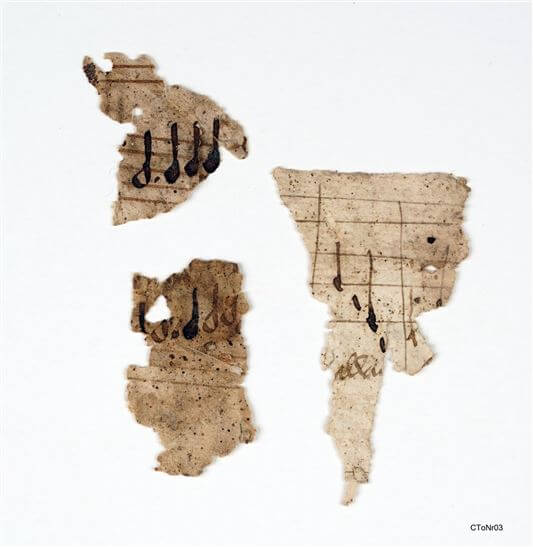
The fragments probably belonged to a liturgical chant book used in the castle chapel. An inventory dating from around 1310 mentions several graduals and an antiphoner with musical notation. It is no longer possible, however, to determine whether the fragments came from one of these books. The surviving sections are too small to identify the original chant or establish the precise function of the manuscript.
Musical fragments
14th or 15th century
Paper, ink
Tyrol Castle, crypt of the castle chapel
Musical fragments
14th or 15th century
Paper, ink
Tyrol Castle, crypt of the castle chapel
The bells from Biberwier
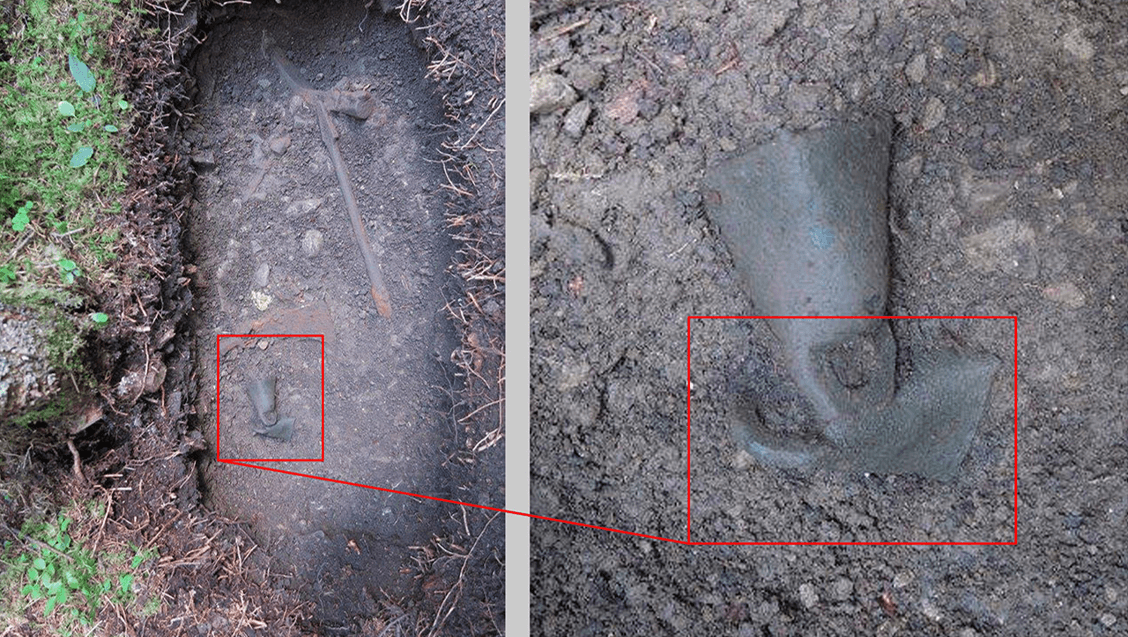
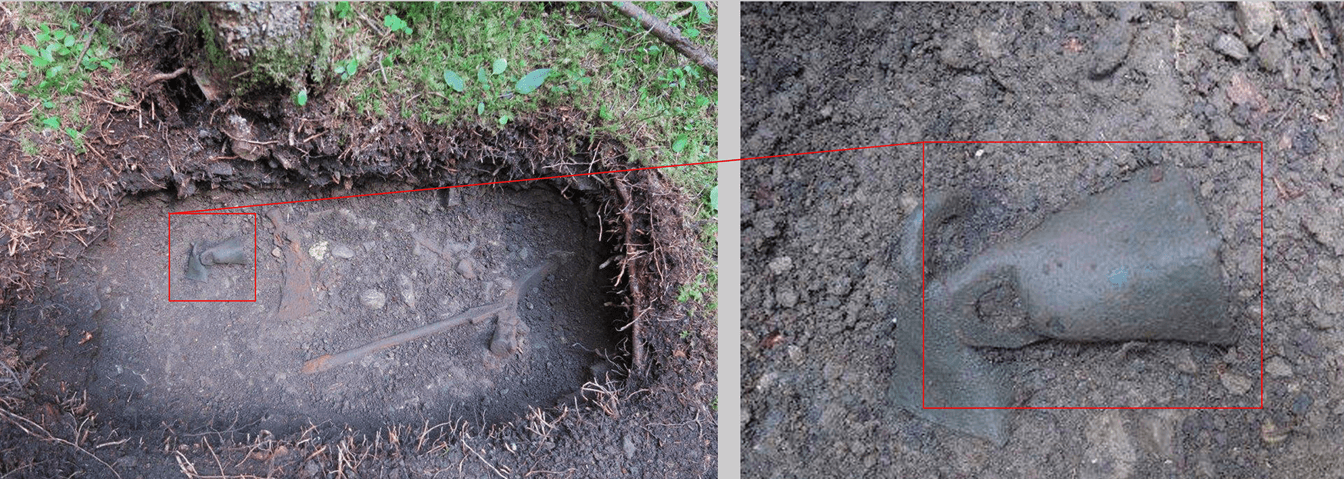
The two bronze bells were discovered in 2015 by F. Neururer in a wooded area near Biberwier in the Imst district. They lay in the humus close to the surface, not far from the Fernpass road. Since they did not come from a systematically excavated archaeological layer, their precise archaeological context is unknown. Their form and comparable finds nevertheless allow them to be dated to the Roman Imperial period.
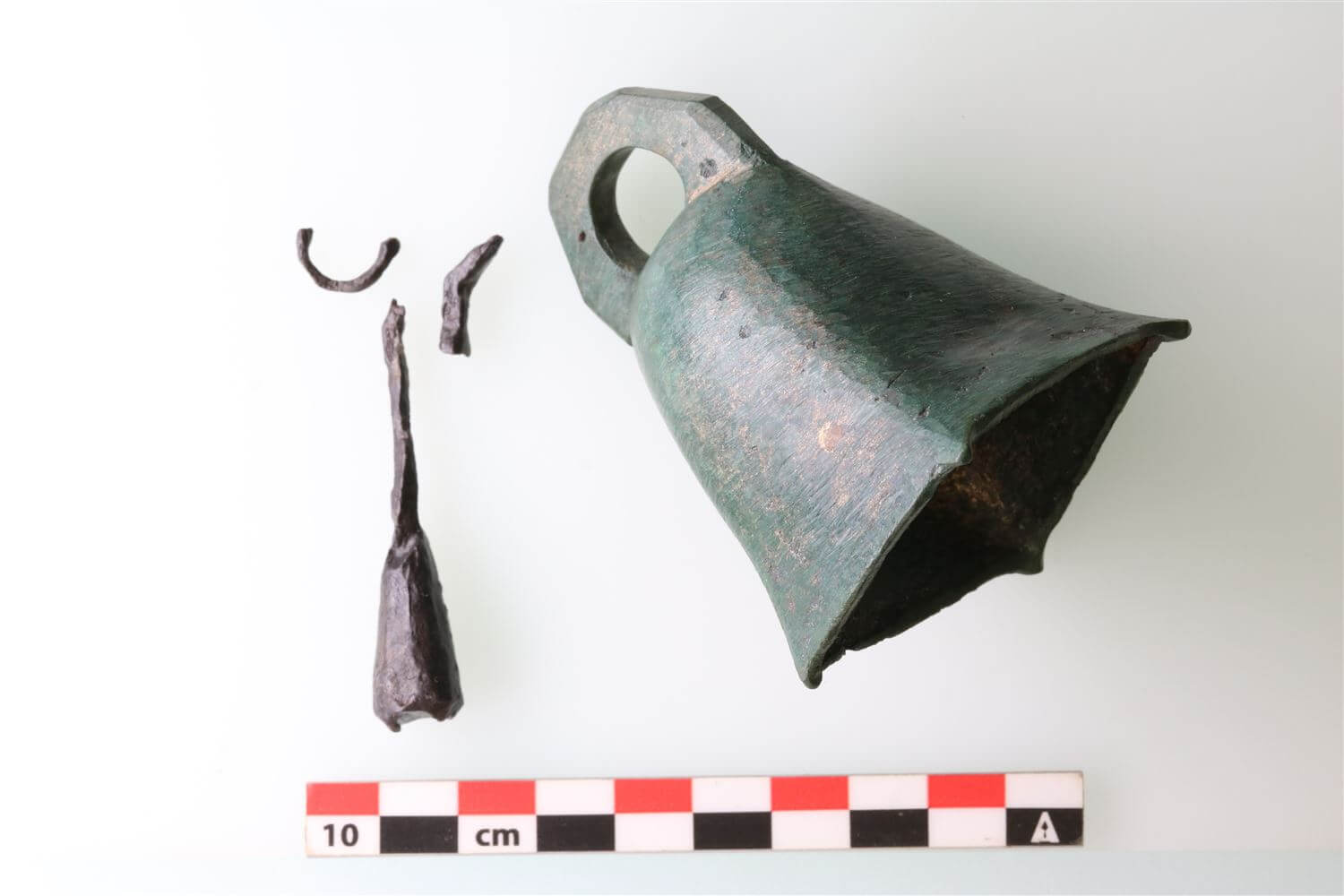
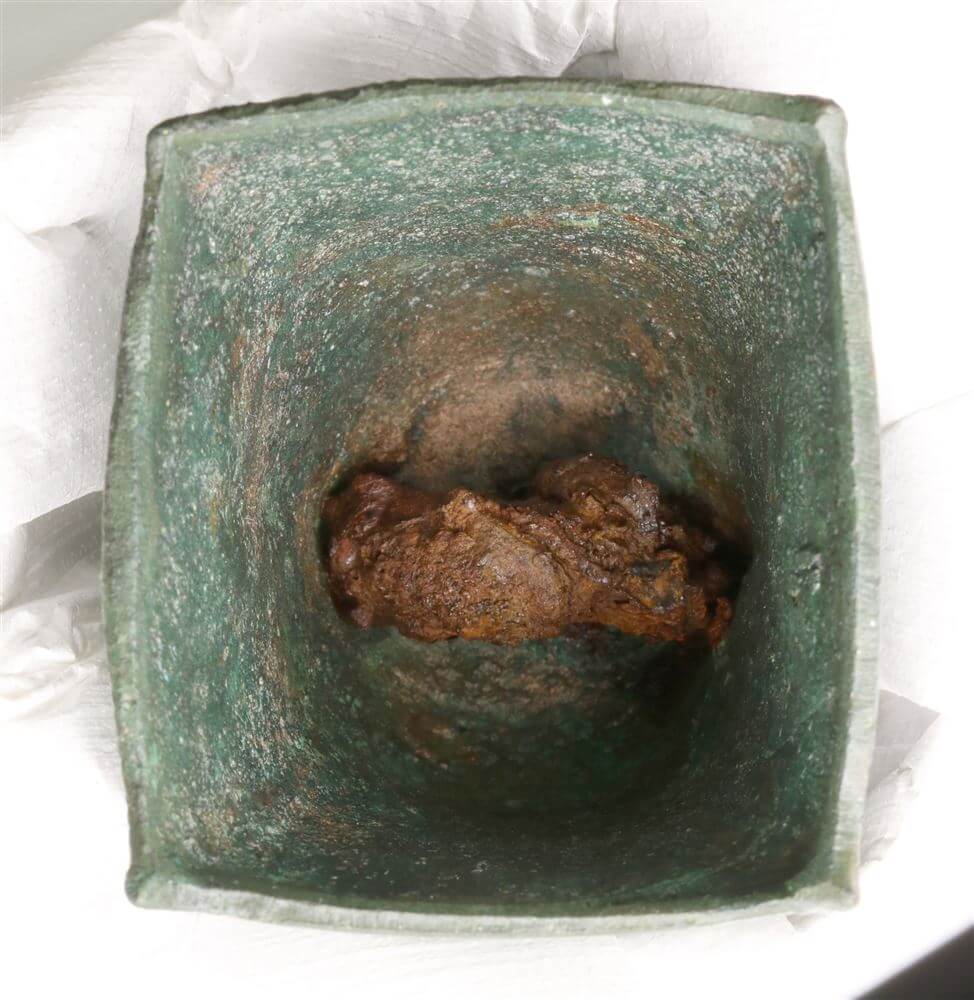
The iron clappers and their suspension fittings were much more heavily fragmented by corrosion than the bronze bell bodies. Two separate sections of bell no. 1 survived: the clapper shaft with its thickened striking end and a possible remnant of the suspension, as well as another part of the clapper suspension that remained inside the bell. Traces of fabric or cord adhered to it. Iron corrosion penetrated the organic material and preserved its structure after the material itself had decayed. The inserted textile may have been used to secure the clapper and deliberately prevent the bell from sounding. In bell no. 2, the clapper and suspension also survive only in several fragments. Another iron fragment may have belonged to a nail rather than to the clapper.
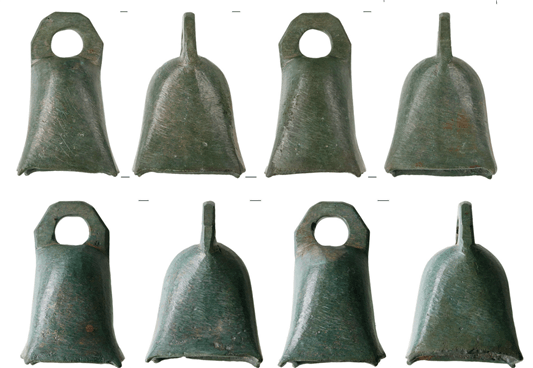
Bell no. 1 (above)
The bell is 8.2 cm high, fully preserved and covered with an even green copper carbonate patina. It has an elongated rectangular body with projecting corners and a faceted, hexagonal suspension loop. Traces of lost-wax casting and subsequent finishing with files remain visible on the surface. The bell belongs to the Roman L2/2 type.
Bell no. 2 (below)
At 8 cm high, the second bell is almost identical in size and also corresponds to bell no. 1 in form. The bell body, corner projections and faceted suspension loop were produced using the same process and carefully finished after casting. Both objects belong to type L2/2, for which several comparable finds are known from the area along the Via Claudia Augusta.
The iron clappers and their suspension fittings were much more heavily fragmented by corrosion than the bronze bell bodies. Two separate sections of bell no. 1 survived: the clapper shaft with its thickened striking end and a possible remnant of the suspension, as well as another part of the clapper suspension that remained inside the bell. Traces of fabric or cord adhered to it. Iron corrosion penetrated the organic material and preserved its structure after the material itself had decayed. The inserted textile may have been used to secure the clapper and deliberately prevent the bell from sounding. In bell no. 2, the clapper and suspension also survive only in several fragments. Another iron fragment may have belonged to a nail rather than to the clapper.
Bell no. 1 (above)
The bell is 8.2 cm high, fully preserved and covered with an even green copper carbonate patina. It has an elongated rectangular body with projecting corners and a faceted, hexagonal suspension loop. Traces of lost-wax casting and subsequent finishing with files remain visible on the surface. The bell belongs to the Roman L2/2 type.
Bell no. 2 (below)
At 8 cm high, the second bell is almost identical in size and also corresponds to bell no. 1 in form. The bell body, corner projections and faceted suspension loop were produced using the same process and carefully finished after casting. Both objects belong to type L2/2, for which several comparable finds are known from the area along the Via Claudia Augusta.